Which Novolac Epoxy Is Best?
Short answer: it depends on your application and exposure conditions. Each Novolac epoxy has different strengths across chemical resistance, temperature tolerance, and flexibility. Use this guide to decide whether #632, #630, or #633 best fits your job.
Quick Selector
| Need | Recommended Product | Typical Use |
|---|---|---|
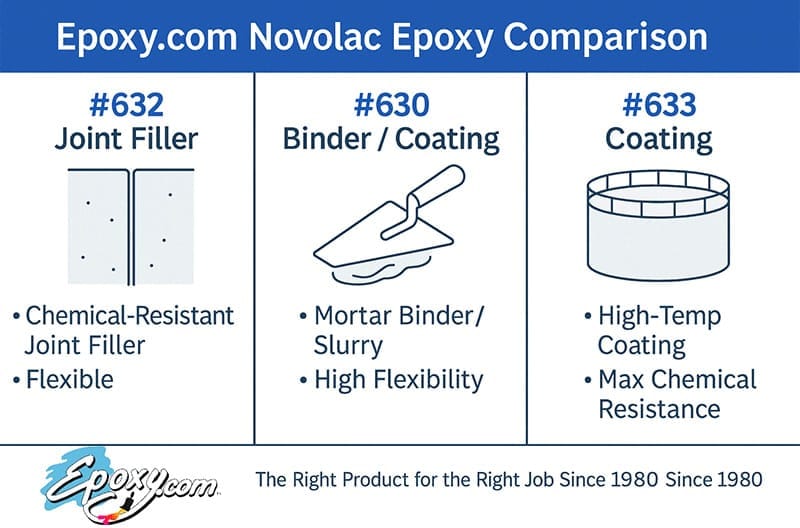
| Chemical-resistant joint filler | #632 Novolac Control Joint Filler | Saw-cut joints in slabs exposed to washdowns or chemical splash. |
| Slurry/mortar binder or coating with flexibility | #630 Novolac Binder/Coating | Secondary containment, utilities, pulp and paper, harsh chemical areas. |
| Maximum coating chemical and temperature resistance | #633 Novolac Coating | Pump pads, trenches, solvent storage, high-exposure zones. |
Product Summaries
#632 – Novolac Control Joint Filler
100% solids, flexible Novolac epoxy designed for saw-cut joints in concrete floors that see chemical attack, thermal cycling, or frequent washdowns. Ideal where joint fillers must resist acids, caustics, or solvents without shrinking or brittle failure.
#630 – Novolac Binder / Coating
A 100% solids Novolac epoxy used as a troweled mortar, slurry binder, or coating on concrete and steel in extremely corrosive environments. Engineered for resistance to strong caustics and up to 98% sulfuric acid under proper design. Common in chemical plants, pulp mills, secondary containment, water and waste treatment, and power utilities. A conductive version is available for ESD-safe, chemical-resistant flooring.
#633 – Novolac Coating
A 100% solids Novolac epoxy coating for harsh chemical and solvent service: secondary containment, solvent storage, pump pads, trenches, and other high-exposure areas. Frequently used as a seal coat over epoxy mortar systems when maximum chemical and temperature resistance are required.
Choosing Between #630 and #633
Both deliver superior performance in aggressive chemical service. Key differences:
| Property / Consideration | #630 Binder/Coating | #633 Coating |
|---|---|---|
| Primary Role | Binder for slurry/mortar that can also coat | Purpose-built coating; can seal mortar systems |
| Flexibility | More flexible | Stiffer |
| Clarity (clear) | Stays clearer longer | Ambers faster |
| Chemical Resistance | Excellent | Slightly higher overall |
| Temperature Resistance | High | Higher |
| Best Fit | When you need slurry/mortar build or some flexibility | When you need maximum coating and temperature resistance |
Typical Applications
- #632 Joint Filler: Chemical plant floors, washdown areas, food and beverage plants, secondary containment slabs.
- #630 Binder/Coating: Slurry resurfacers, secondary containment walls, trenches, utilities, pulp and paper mills, water and wastewater treatment.
- #633 Coating: Top coats and seal coats for mortar systems, pump pads, solvent storage areas, high-temperature zones.
Installation & Technical Notes
Proper mixing and installation is critical to the optimal success of all products. See Installation Tips, Techdata, & MSDS for more details on our products. Be sure to contact us with any questions and/or concerns that you have.
Talk to a Technical Specialist
For more information please contact:
Epoxy.com Technical Support
Phone: 352-533-2167
Email: norm@epoxy.com