Technical Data Sheet
Product #2 Chemical Resistant Epoxy Coating
A two-component, high-build chemical-resistant epoxy coating for protecting concrete, steel, wood, and other structural materials exposed to many non-oxidizing acids, alkalis, fuels, oils, and process chemicals.
General Description
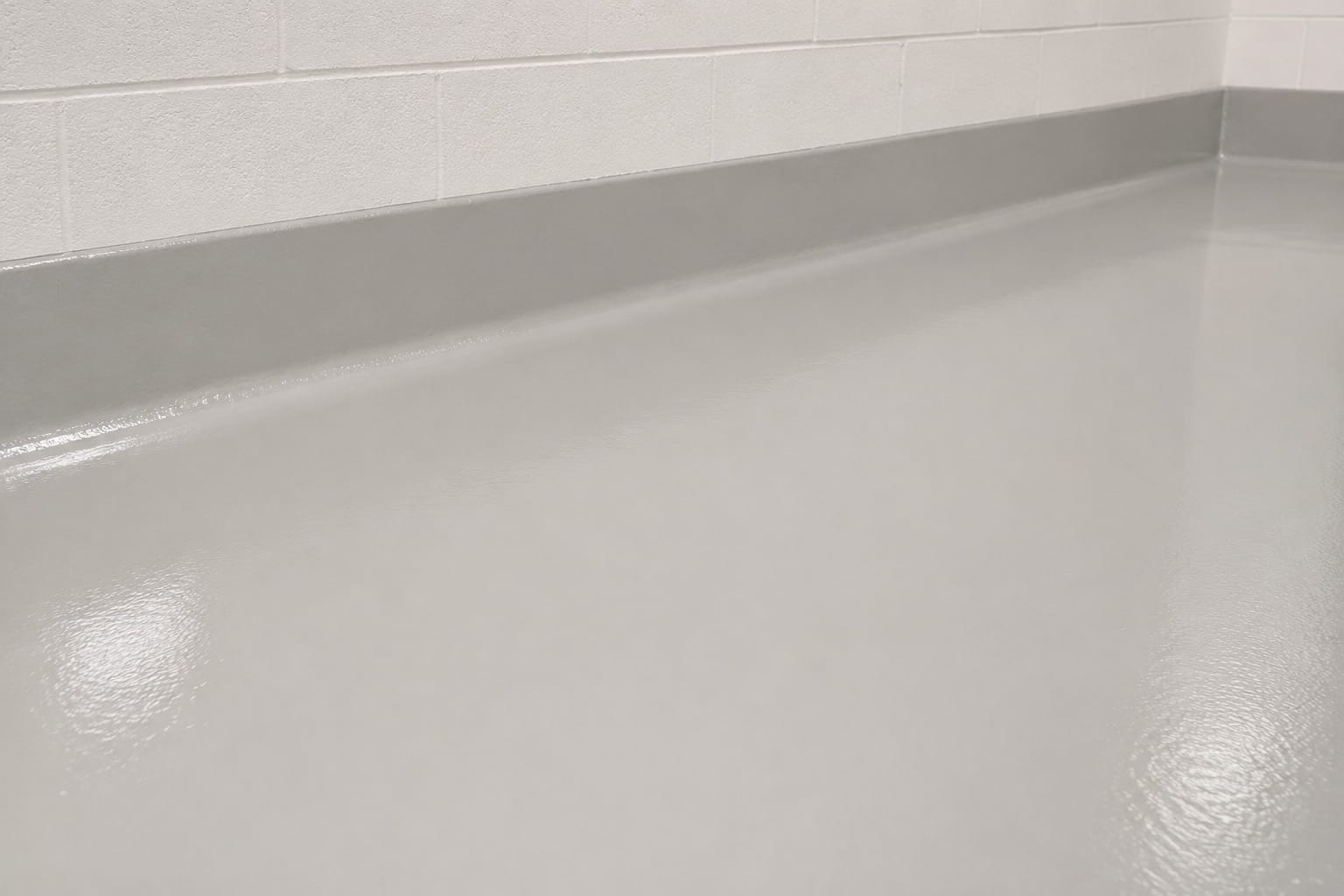
Epoxy.com Product #2 is a pigmented, high-performance chemical-resistant epoxy based on modified Bisphenol F and novolac epoxy chemistry with a modified cycloaliphatic amine curing system and fillers. It produces a smooth, high-gloss protective finish, or a textured finish when suitable grit is incorporated.
The cured coating is strong yet resilient and is less brittle than many conventional high-build epoxies. It is essentially odorless during application and may be used in occupied areas when normal ventilation and safety practices are followed.
Advantages
- Excellent chemical and stain resistance
- Strong yet resilient cured film
- Less brittle than many conventional high-build epoxies
- Low odor for use in occupied areas
- Suitable for wet-process flooring applications
- Smooth high-gloss finish or textured finish with added grit
- May be applied by roller, brush, or specialized spray equipment
- 100% solids with no intentionally added solvent
Typical Uses
Industrial, commercial, institutional, and process environments requiring a durable chemical-resistant coating, including:
- Chemical processing, pump, and storage areas
- Food, beverage, bakery, bottling, canning, and meat-processing facilities
- Laboratories, research facilities, hospitals, and healthcare facilities
- Manufacturing plants, machine shops, warehouses, loading docks, ramps, and forklift areas
- Water and wastewater plants, power plants, sewer plants, and secondary containment
- Kitchens, laundries, locker rooms, shower rooms, restrooms, kennels, and veterinary facilities
- Concrete floors and walls, block walls, steel surfaces, marine surfaces, and tanks
Additional Application Areas
- Aisle ways
- Assembly plants
- Basement floors and walls
- Break rooms
- Cafeterias
- Car washes
- Cells
- Church floors
- Classroom floors
- Corridors
- Educational facilities
- Entrances
- Filters
- Law-enforcement facilities
- Leveling concrete
- Mortuaries
- Nuclear-plant floors
- Offices
- Patching concrete
- Photography-processing areas
- Pools
- Restaurants
- Semiconductor plants
- Shopping centers
- Shops
- Showrooms
- Stores
- Supermarkets
Surface Preparation
Surface preparation is critical to the successful installation of any resinous coating system. Surfaces must be clean, sound, dry, and free of dirt, laitance, grease, wax, curing compounds, sealers, and other foreign material.
Prepare concrete by shot blasting, diamond grinding, or other appropriate mechanical abrasion. Remove dust and debris before coating. New concrete should normally be at least 28 days old.
See the Epoxy.com Surface Preparation Guide for additional requirements.
Mixing
- Condition the material and substrate to at least 50°F before mixing and application.
- Stir each component separately before combining.
- Mix 2 parts Part A with 1 part Part B by volume.
- Mix for approximately three minutes with a low-speed drill and suitable mixing paddle, scraping the sides and bottom of the container.
- Do not thin.
Working life shortens as material temperature, mixed mass, and ambient temperature increase. Mix only the quantity that can be placed within the stated working time.
Application
For concrete, prime with Product #899 Epoxy Primer or, where greater chemical resistance is required, Product #12 Chemical Resistant Epoxy Primer.
Apply by roller, brush, or specialized spray equipment operated by experienced personnel. Epoxy.com recommends two coats at 8-10 wet mils per coat, yielding a total wet film thickness of approximately 16-20 mils. Expected coverage is approximately 160-200 square feet per gallon per coat, depending on surface profile, porosity, texture, application method, and job conditions.
Recoat in approximately 12-16 hours at 75°F. Allow 24 hours before light foot traffic and five days at 75°F for full cure and maximum chemical resistance.
Review the Epoxy.com installation guidance before beginning work.
Technical Data
| Composition | Modified Bisphenol F and novolac epoxy resins, modified cycloaliphatic amines, pigments, and fillers |
|---|---|
| Mix ratio | 2 parts A to 1 part B by volume |
| Solids content | 98% |
| Solvent content | Nil |
| Viscosity, mixed | 1,000 cps at 75°F |
| Weight per gallon, mixed | Approximately 11.5 lb/gal |
| Working life | 20-25 minutes at 75°F |
| Recommended film thickness | Two coats at 8-10 wet mils per coat |
| Expected coverage | Approximately 160-200 ft²/gal per coat |
| Dry to touch | 6-8 hours at 75°F |
| Recoat interval | 12-16 hours at 75°F |
| Light foot traffic | 24 hours at 75°F |
| Full cure and maximum chemical resistance | 5 days at 75°F |
| Packaging | 3-gallon and 15-gallon units |
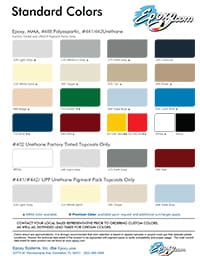
| Colors | Black, white, standard colors, and custom colors subject to approval, lead time, and possible additional cost |
Published values are typical and should not be interpreted as guaranteed minimum or maximum specifications unless expressly stated.
Limitations and Important Conditions
- Substrate and material temperature must be at least 50°F during installation and initial cure.
- Do not apply over dirt, wax, laitance, curing compounds, moisture, or other bond-breaking contamination.
- Do not thin.
- Product #2 is not recommended for immersion in oxidizing agents or mineral acids.
- Exterior sunlight exposure will cause yellowing and may reduce gloss.
- Chemical resistance depends on the specific chemical, concentration, temperature, exposure time, cleanup frequency, and actual service conditions.
- Test questionable substrates, chemicals, and service conditions before full installation.
Chemical Resistance — Product #2
The following ratings are for Product #2 and are intended as a practical guide. Consult Epoxy.com Technical Support for chemicals, concentrations, temperatures, or exposure conditions not listed.
| Reagent | Concentration | Rating |
|---|---|---|
| Acetic Acid | 5% | R |
| Acetone | — | L |
| Ammonium Hydroxide | 38% | L |
| Beer | — | R |
| Bleach | 10% | L* |
| Brake Fluid | — | R |
| Citric Acid | 30% | R |
| Citric Acid | 40% | L |
| Crude Oil | — | R |
| Diesel Fuel | — | R |
| Ethylene Glycol | — | R |
| Fatty Acids | — | L |
| Gasoline | — | R |
| Hydrochloric Acid | 15% | R |
| Lactic Acid | 15% | R |
| Lactic Acid | 50% | L |
| Methyl Ethyl Ketone | — | L |
| Nitric Acid | 10% | R* |
| Orange Juice | — | R |
| Hydrogen Peroxide | 35% | L |
| Phosphoric Acid | 85% | L |
| Skydrol | — | R |
| Sodium Hydroxide | 50% | R |
| Sulfuric Acid | 20% | R* |
| Toluene | — | L |
| Urea | — | R |
| Vinegar | — | L |
| Xylene | — | L |
R — Recommended: Suitable for splash-and-spill service with daily cleanup.
L — Limited: Limited recommendation for exposure of eight hours or less, occasional spills only, and more frequent cleanup.
* May cause slight staining or discoloration depending on exposure time. Increasing exposure time can increase reagent concentration and reactivity.
Cleanup and Safety
Remove uncured material from skin as soon as possible using soap and water. If soap and water are not sufficient, use a waterless hand cleaner, such as Gojo® or Fast Orange®. If additional cleaning is still needed, white vinegar or 91% isopropyl alcohol may help remove remaining uncured epoxy. The use of strong solvents on the skin is not recommended.
Clean tools and equipment promptly before the material cures. Xylene, acetone, MEK, and many lacquer thinners may be effective; however, the selected solvent must comply with the current SDS, the facility’s rules, local fire and environmental requirements, ventilation controls, and disposal procedures. Solvent selection may vary because a facility may restrict a solvent for reasons such as flammability, even when another solvent presents different worker-exposure considerations.
Maintenance
Product #2 is normally cleaned with neutral soaps or detergents. Establish a maintenance schedule appropriate for the type and frequency of traffic, chemical exposure, surface texture, and sanitation requirements.
Color Selection
Product #2 is available in black, white, standard Epoxy.com colors, and approved custom colors. Custom colors may require laboratory approval, additional lead time, and additional cost.
Color notice: Screen, printer, lighting, and photographic reproduction can change the appearance of a color. Use a physical sample for critical color selection.
Related Products and Technical Resources
Technical Notice
The information presented here is based on laboratory data, published information, field experience, and conditions believed to be reliable. Because substrate conditions, preparation, mixing, application, environment, and service exposure are outside Epoxy Systems, Inc.'s control, users must determine the suitability of the product and system for the intended use.
Revision date: 2026-07-15